
Embark on a journey towards efficient business travel planning with the comprehensive checklist provided in this engaging guide. Save time and money by following expert tips and strategies shared below.
Business Travel Planning Checklist
When preparing for a business trip, having a well-structured checklist can make a significant difference in ensuring a smooth and successful journey. Here are some essential items to include in your business travel planning checklist:
List of Essential Items:
- Travel documents (passport, visa, ID, tickets)
- Itinerary with contact information
- Business attire and casual outfits
- Electronic devices and chargers
- Medications and first aid kit
- Important work-related materials
- Cash and credit cards
Importance of a Structured Checklist:
Having a structured checklist for business travel can help you stay organized, reduce stress, and ensure that you have everything you need for a successful trip. By following a checklist, you can avoid last-minute scrambling and focus on your work objectives during the trip.
Tips for Creating an Effective Travel Planning Checklist:
- Start early and make a detailed list of items you need to bring.
- Categorize items based on their importance and relevance to your trip.
- Consider the specific requirements of your destination and adjust your checklist accordingly.
- Review and update your checklist regularly to account for any changes or additional items.
- Share your checklist with colleagues or travel companions to ensure nothing is overlooked.
Time-Saving Strategies
When it comes to business travel planning, time is of the essence. Here are some strategies to help you save time during the planning phase so you can focus on the important aspects of your trip.
Utilize Travel Management Tools
Travel management tools such as TripIt, Expensify, and Concur can help streamline the travel planning process by organizing all your travel details in one place. These tools can store your itineraries, track expenses, and even provide real-time updates on flight delays or changes.
Delegate Tasks and Prioritize
Delegate tasks to team members or assistants to divide and conquer the planning process. Prioritize tasks based on urgency and importance to ensure that critical aspects of your trip are taken care of first. This will help you stay organized and focused on the most essential details.
Use Pre-Approved Vendors and Suppliers
Establish relationships with pre-approved vendors and suppliers for accommodations, transportation, and other travel needs. This can save time by eliminating the need to research and compare different options every time you plan a trip. Working with trusted partners can also ensure a smooth planning process and reliable service.
Create Templates for Repeat Travel
If you frequently travel to the same destinations or for similar purposes, create templates for your itineraries, packing lists, and expense reports. This will save time by avoiding repetitive tasks and ensuring consistency in your planning process. Simply update the details as needed for each trip.
Set Reminders and Alerts
Utilize calendar reminders, notifications, and alerts to stay on top of deadlines, bookings, and other important tasks. Setting reminders for critical milestones in your planning process can help you stay organized and ensure that nothing falls through the cracks.
Automate Expense Reporting
Consider using automated expense reporting tools like Expensify or Receipt Bank to streamline the process of tracking and reporting expenses. These tools can capture receipts, categorize expenses, and generate reports automatically, saving you time and hassle during and after your trip.
Money-Saving Tips
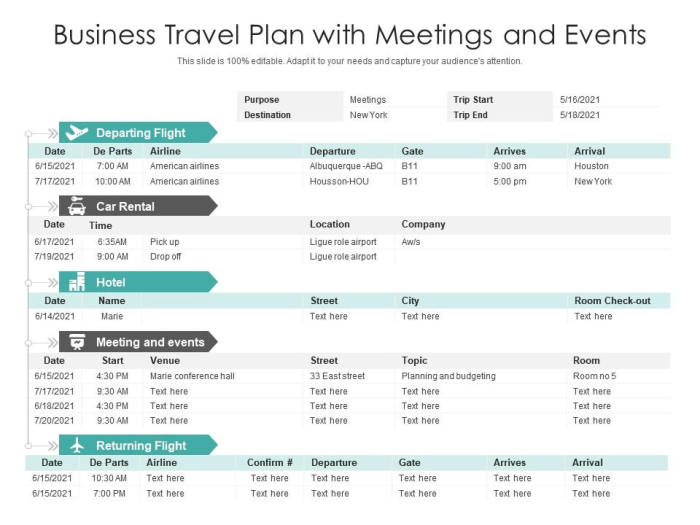
When it comes to business travel, saving money is always a top priority. By implementing cost-effective strategies for booking flights, accommodations, and transportation, you can keep your travel expenses in check. Setting a budget for business travel and sticking to it is crucial to avoid overspending and maintain financial discipline.
Additionally, taking advantage of loyalty programs and discounts can help you save money during your travels.
Cost-Effective Strategies
- Book flights in advance to secure lower fares.
- Consider flying during off-peak hours or days to find cheaper tickets.
- Opt for budget airlines or look for promotions to save on airfare costs.
- Use online booking platforms to compare prices and find the best deals on accommodations.
- Consider alternative lodging options like Airbnb or corporate housing for cost savings.
Setting a Budget
- Calculate the total cost of your business trip, including transportation, accommodation, meals, and incidentals.
- Allocate a specific budget for each expense category to ensure you stay within your financial limits.
- Track your expenses throughout the trip to monitor your spending and make adjustments if needed.
Loyalty Programs and Discounts
- Join frequent flyer programs offered by airlines to earn miles and redeem them for free flights or upgrades.
- Sign up for hotel loyalty programs to enjoy discounts, free nights, and other perks during your stays.
- Utilize corporate discounts or negotiated rates with travel providers to save on business travel expenses.
- Consider using travel credit cards that offer rewards and benefits for business-related purchases.
Packing Essentials
When it comes to business travel, packing efficiently is key to a successful trip. Here are some must-have items for business travelers and strategies to maximize luggage space.
Must-Have Items
- Professional attire for meetings and conferences
- Comfortable clothing and shoes for travel and downtime
- Toiletries and personal care items
- Travel-sized laundry detergent for longer trips
- Important documents like passports, visas, and travel insurance
- Portable charger and adapters for electronic devices
- Medications and first aid kit
Packing Strategies
- Roll clothes instead of folding to save space
- Use packing cubes or compression bags to organize and compact items
- Wear bulky items like jackets and boots on travel days
- Pack versatile pieces that can be mixed and matched for different outfits
Packing Electronics and Documents
- Keep electronics in a separate, padded compartment in your carry-on bag
- Back up important documents electronically and carry hard copies as well
- Invest in a travel organizer for cables, chargers, and other accessories
- Label your electronics and chargers to prevent mix-ups
Planning Meetings and Itineraries
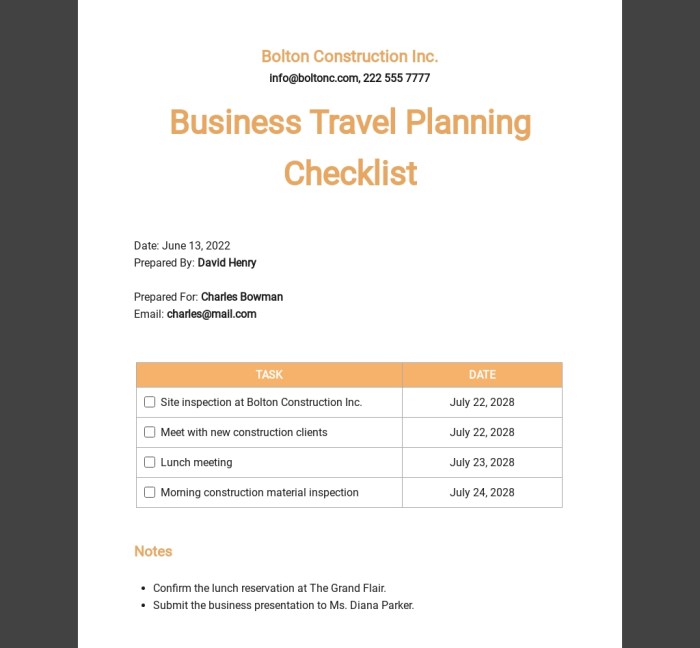
Effective planning of meetings and appointments during business trips is crucial to ensure productivity and efficiency. It is essential to create a well-organized itinerary that includes all necessary meetings, appointments, and travel arrangements.
Scheduling Downtime and Leisure Activities
It is important to schedule downtime and leisure activities in the itinerary to avoid burnout and maintain a healthy work-life balance. Incorporating time for relaxation and leisure can help reduce stress and increase productivity during business trips. Consider adding activities like sightseeing, dining at local restaurants, or exploring the area to make the most of your downtime.
- Include buffer time between meetings to allow for unexpected delays or emergencies.
- Plan leisure activities in advance to make the most of your free time.
- Consider scheduling meetings in the morning or early afternoon to free up evenings for relaxation.
Wrap-Up
In conclusion, mastering the art of business travel planning can lead to significant time and cost savings. By implementing the checklist and techniques discussed, you can ensure smooth and successful trips every time.
Answers to Common Questions
What are some cost-effective strategies for booking flights?
Look for deals on airline websites, consider flexible travel dates, and use travel reward credit cards to earn points.
How can I efficiently pack electronics for a business trip?
Use organizers to keep cables and devices separate, pack chargers in one place, and carry a power bank for emergencies.
Why is scheduling downtime important in a business trip itinerary?
Downtime allows for relaxation and rejuvenation, ensuring you remain productive during business meetings.
Are loyalty programs worth joining for business travel?
Yes, loyalty programs offer benefits like upgrades and discounts that can save money in the long run.

